Where They Go Next: How Trafficking in Cultural Property Enables Money Laundering
Three months after the Louvre Museum in Paris was hit by a dramatic heist, the investigation remains incomplete where it matters the most: recovery. Authorities have charged suspects, but none of the stolen jewels from the historic Napoleon collection have been found.
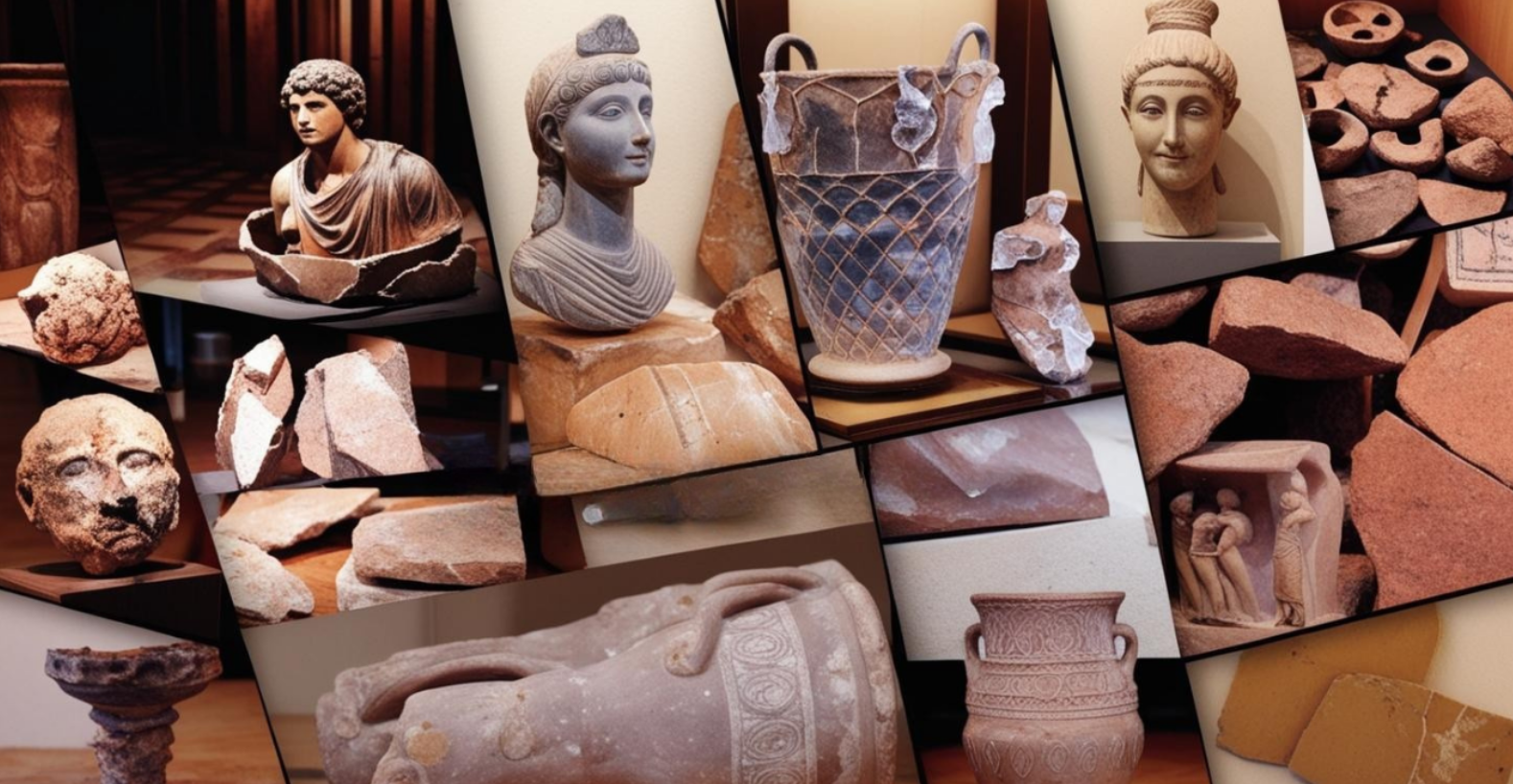
That kind of disappearance is not an outlier. The illegal trade in cultural property artworks, antiquities, and other high-value heritage objects is among the world’s oldest and most profitable forms of criminal activity. Estimates suggest roughly $4 billion to $6 billion in art is stolen each year. The UN Office on Drugs and Crime has ranked cultural property smuggling alongside arms and drug trafficking as the most lucrative illicit trades.
Cultural property attracts criminals not only because it can be valuable, but because it is structurally easy to move, disguise, and monetize. Illicit trafficking often runs through complex supply chains that touch both legal and black markets, allowing significant value to change hands under limited public scrutiny. First, these assets are generally portable, making them easier to steal, transport, and conceal than other assets of wealth. Jewelry can be especially hard to trace once stolen because pieces may be melted down or recut while retaining much of their value before resale. Second, the art market’s long-standing norms of discretion and trust-based, informal dealing make it difficult to verify provenance, monitor transactions, or confidently map who controls the asset at any given time. Unlike funds held at a financial institution, cultural property can be purchased, stored, and resold with minimal standardized recordkeeping or transaction trails, even when auction houses or galleries facilitate the sale. Dealers also typically have no obligation to independently report sales to the government. Third, because valuation is inherently subjective, prices can be easily manipulated in ways that obscure the movement of illicit proceeds.
Together, these features make cultural property unusually useful as a money-laundering vehicle. A common pattern is to use illicit profits to buy art or related assets, park value in them, and later sell them so the proceeds appear legitimate and commercially sourced. Cultural property can also function as payment or collateral, offering another route to integrate illicit value into the financial system. This illicit trafficking supports global criminal networks associated with money laundering, tax evasion, and even terrorism financing.
Some auction houses and galleries conduct due diligence on potential clients, partly to manage credit risk and protect their own reputations. But these practices are purely voluntary and can be abandoned without the threat of civil or criminal enforcement, which presents a structural vulnerability for the U.S. financial system. In response, the U.S. government has sought to extend the Bank Secrecy Act’s anti-money laundering (AML) framework more directly into the art market, seeking to align with the tighter regulations in the EU and UK and mitigate cross-border regulatory arbitrage. In July 2025, a bipartisan proposal, the Art Market Integrity Act, was introduced. If enacted, it would require art market professionals to implement robust AML controls and accept significant reporting and recordkeeping duties. Taken together, these developments suggest the U.S. art market may be moving toward a more regulated and more publicly accountable era.
Article Written by Chaewon Moon
Sources:
Catherine Porter, The Louvre Thieves Dropped This Priceless Crown. Now It Looks Like This., N.Y. TIMES (Feb. 5, 2026), available at https://www.nytimes.com/2026/02/05/world/europe/louvre-heist-crown-damage-eugenie-empress.html (last accessed Feb. 10, 2026).
Evgeniya Kleshcheva & Cristina Silveiro, Stolen Past: Inside the fight against illicit antiquities trafficking., U.N. (Nov. 14, 2025), available at https://news.un.org/en/story/2025/11/1166368 (last accessed Feb. 10, 2026).
Isobel Markham, Art Money Launderers Face Expanding Regulatory Canvas, WALL ST. J. (May 1, 2024), available at https://deloitte.wsj.com/riskandcompliance/art-money-launderers-face-expanding-regulatory-canvas-091ee7aa?reflink=desktopwebshare_permalink (last accessed Feb. 10, 2026).
U.S. Dep’t of the Treasury, Study of the Facilitation of Money Laundering and Terror Finance Through the Trade in Works of Art (Feb. 4, 2022), available at https://home.treasury.gov/system/files/136/Treasury_Study_WoA.pdf (last accessed Feb. 10, 2026).
Graham Bowley, As Money Launderers Buy Dalís, U.S. Looks at Lifting the Veil on Art Sales, N.Y. TIMES (Jun. 19, 2021), available at https://www.nytimes.com/2021/06/19/arts/design/money-laundering-art-market.html (last accessed Feb. 10, 2026).
David Stier et al., Art Market Integrity Act introduced with bipartisan support to combat money laundering risks in the art industry, DLA PIPER (Aug. 21, 2025), available at https://www.dlapiper.com/en/insights/publications/2025/08/art-market-integrity-act-introduced-with-bipartisan-support (last accessed Feb. 11, 2025).
You May Also Like