Ready, Set, Silence: Athlete Expression, Rule 50, and the Commercial Stakes of the Olympic Games
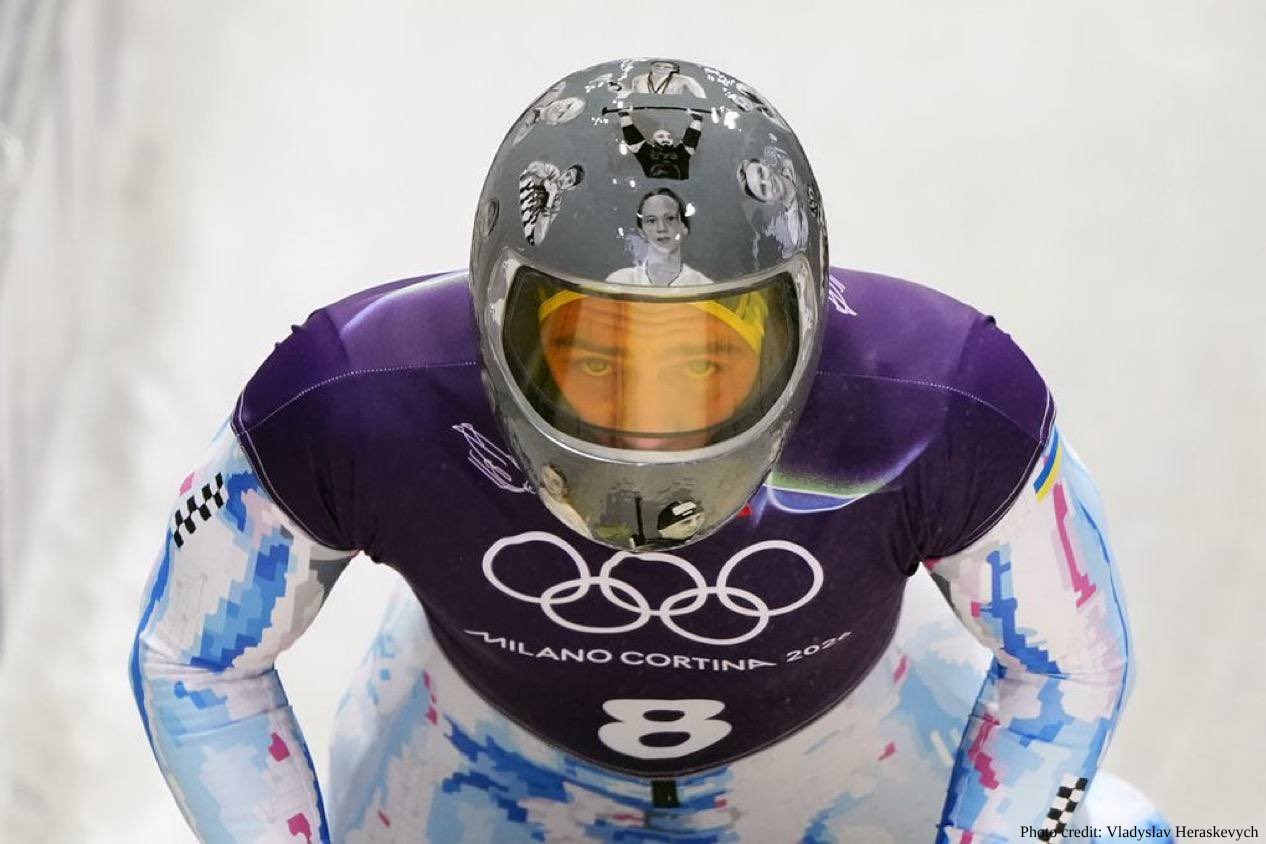
On February 9, Ukrainian skeleton racer Vladyslav Heraskevych stepped onto the starting line at the Milano–Cortina Winter Olympics wearing a helmet that resulted in his disqualification. The helmet was more than protective equipment; it served as a tribute to lives lost since Russia’s full-scale invasion of Ukraine in 2022. It displayed images of Ukrainian athletes and coaches killed in the war, a conflict that has claimed more than 650 members of the sporting community and destroyed over 800 sports facilities, including Olympic training centers. For Heraskevych, the images represented mourning and remembrance. For Olympic authorities, they constituted prohibited political expression.
After repeatedly refusing to change helmets, Heraskevych was disqualified by the International Bobsleigh and Skeleton Federation. His appeal to the Court of Arbitration for Sport (CAS) was dismissed without comment. The ruling left athletes, coaches, and spectators questioning whether participation in the Olympic Games requires the surrender of core expressive rights.
The CAS serves as the principal arbitral body for resolving international sports disputes. In dismissing Heraskevych’s appeal, the panel found the Athlete Expression Guidelines reasonable and proportionate. Although the CAS acknowledged his commemorative intent, it ultimately deferred to the regulatory framework established by the International Olympic Committee (IOC).
The IOC is a non-profit organization that reinvests 90% of its revenues from the Games into athletes and the development of global sport, distributing $4.7 billion USD per day to support athletes and sporting organizations. This revenue is largely generated through broadcasting and marketing rights. While the IOC positions itself as an entity that prioritizes athlete welfare, it receives criticism when incidents like these occur.
The disqualification was grounded in Rule 50 of the Olympic Charter, which states: “No kind of demonstration or political, religious or racial propaganda is permitted in any Olympic sites, venues or other areas.” The IOC has interpreted this rule broadly to prohibit overt gestures, such as kneeling or displaying signs, as well as visual tributes deemed to carry political or symbolic meanings.
While the IOC maintains that it fully supports freedom of expression, it asserts a legitimate interest in preserving political neutrality within Olympic venues. Consequently, expression is restricted during competition, in Olympic villages, and throughout official ceremonies, with violations assessed on a case-by-case basis by National Olympic Committees, International Federations, and the IOC.
This is not the first time Olympic expression has tested Rule 50. At the Paris 2024 Summer Olympics, an Afghan athlete was sanctioned for displaying “Free Afghan Women” in protest of Taliban-imposed restrictions on women’s rights. In contrast, at the Beijing 2022 Winter Olympics, Heraskevych was photographed holding a sign reading “No War in Ukraine” days after completing his events, without IOC disciplinary action. The apparent inconsistency has fueled criticism that Rule 50 is applied selectively and without clear principled distinction.
At the core of this controversy lies a structural tension in international sports law. The IOC is neither a state actor formally bound by international human rights treaties nor merely a private association exempt from such principles. Operating under Swiss law, it functions as a quasi-public regulatory authority over a global class of athletes. Its decisions implicate expressive freedoms typically protected under international human rights, yet those freedoms are contractually limited as a condition of Olympic participation.
Heraskevych’s disqualification underscores the delicate balance between athlete expression and political neutrality, with lasting implications for international viewership, the commercial stakes and structures that sustain the Olympic movement, and the enduring legacy of the Games.
Article Written by Julianna Kiklis
Sources:
Minky Worden & Kseniya Kvitka, Olympic Ban Raises Thorny Free Speech Issues, Hum. Rts. Watch, (Feb. 19, 2026), available at https://www.hrw.org/news/2026/02/19/olympic-ban-raises-thorny-free-speech-issues, (last visited Feb. 28, 2026).
Ludwig Burger & Andreas Rinke, Germany’s Merz: disqualified Olympian’s helmet symbolizes Ukraine’s courage, Reuters, (Feb. 23, 2026), available at https://www.reuters.com/world/germanys-merz-disqualified-olympians-helmet-symbolizes-ukraines-courage-2026-02-23/, (last visited Feb. 28, 2026).
Graham Dunbar, Ukrainian athlete tests the Olympic rules on free speech — and gets disqualified, 59 NEWS, (Feb. 12, 2026), available at https://www.wvnstv.com/news/ap-ukrainian-athlete-tests-the-olympic-rules-on-free-speech-and-gets-disqualified/#:~:text=Ukrainian%20athlete%20tests%20the%20Olympic%20rules%20on%20free%20speech%20—%20and%20gets%20disqualified,-by:%20GRAHAM%20DUNBAR&text=MILAN%20(AP)%20—%20Ukrainian%20skeleton,athletes%20who%20staged%20prominent%20protests, (last visited Feb. 28, 2026).
Skeleton pilot Vladyslav Heraskevych not allowed to participate at Milano Cortina 2026 after refusing to adhere to the IOC athlete expression guidelines, Int’l Olympic Comm., (Feb. 12, 2026), available at https://www.olympics.com/ioc/news/skeleton-pilot-vladylsav-heraskevych-not-allowed-to-participate-at-milano-cortina-2026-after-refusing-to-adhere-to-the-ioc-athlete-expression-guidelines (last visited Feb. 28, 2026).
Steve Buckley, Ukrainian sledder Vladyslav Heraskevych files appeal over DQ for skeleton helmet, The Athletic, (Feb. 13, 2026), available at https://www.nytimes.com/athletic/7042600/2026/02/12/olympics-vladyslav-heraskevych-ukrainian-helmet-skeleton-appeal/, (last visited Feb. 28, 2026).
Milano Cortina 2026, How the IOC finances a better world through sport, Int’l Olympic Comm., (2026), available at https://www.olympics.com/ioc/funding (last visited Feb. 28, 2026).
You May Also Like