Legal Challenges Posed by The New Space Race in Light of the Artemis II Mission
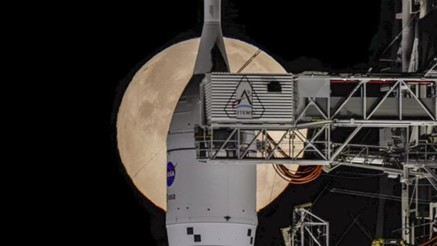
America is looking to the stars more than ever before. And no, Rocky and Ryan Gosling from the new movie “Project Hail Mary” are not the reasons for it (as fun as Rocky seems to be having flying through and saving the stars). The reason is largely NASA’s Artemis II mission. Artemis II represents the first-time humans have orbited the Moon in over half a century and paves the way for potential crewed landing missions in the coming years. Artemis II also represents a check in the timeline of the so-called “New Space Race,” which has pitted the U.S. against other nations, such as Russia and China, tested the limits of the public spaceflight, and, unfortunately, exposed the inadequacies of the legal frameworks governing the peaceful uses and regulation of space. It also poses many questions for the international legal community.
At the center of legal discussions surrounding the Artemis missions are the Artemis Accords. The Artemis Accords are shared guidelines for countries to ensure that space exploration is conducted safely, peacefully, transparently, and sustainably. The Accords build on the existing space law framework. This framework includes the Outer Space Treaty, the Rescue and Return of Astronauts Treaty, the Liability Convention, and the Launch Site Registration Convention. These treaties establish that outer space and celestial bodies cannot be claimed or colonized as sovereign territory. They also prohibit weapons of mass destruction in space, require nations to assist and safely return astronauts in distress, hold countries liable for damage caused by their space objects, and mandate the registration and tracking of objects launched into space.
Artemis II is refocusing the world back onto these agreements. For starters, the organization of the mission crew reflects the international legal frameworks in place for lunar missions. As a condition of Canada being the first signatory to the Accords, the Canadian Space Agency (CSA) was guaranteed that a CSA astronaut would be on Artemis II. More broadly, other signatories to the Accords have agreed to provide various components and services to the Artemis missions, in exchange for their involvement with future Moon missions. However, the U.S. has made a clever legal and contracting decision: countries that seek to venture to the Moon with them must sign the Artemis Accords and agree to abide by its provisions. This creates a group of nations agreeing to stand with the firm principles of peaceful and globally beneficial space exploration, as opposed to nations like China and Russia, who may exploit the Moon for their own gain, potentially place weapons on the lunar surface, and seek to claim it for themselves—counter to existing treaties. Artemis II serves as a waypoint to future missions and hastens the timeline for mankind’s return to the lunar surface. Therefore, further work is needed by the international legal community and the growing cohort of space scholars to ensure that space-faring nations of the world know the interplanetary rules of the road and that there is a backstop in place to enforce them.
Article Written by Brian Szczotka
Sources:
Andrew Jones, Can current space law handle the new space age?, SPACE.COM (Feb. 9, 2026), available at https://www.space.com/space-exploration/can-current-space-law-handle-the-new-space-age (last visited Apr. 3, 2026).
Michael Neufeld, Why Is a Canadian Going to the Moon on Artemis II?, AIR & SPACE MUSEUM (Apr. 24, 2023), available at https://airandspace.si.edu/stories/editorial/why-canadian-going-moon-artemis-ii (last visited Apr. 3, 2026).
Space Law: The Law of Outer Space, GEORGETOWN L. CTR. (Sep. 12, 2025), available at https://guides.ll.georgetown.edu/c.php?g=1037047&p=7518561 (last visited Apr. 3, 2026).
The Artemis Accords, NASA (Jan. 26, 2026), available at https://www.nasa.gov/artemis-accords/ (last visited Apr. 3, 2026).
You May Also Like