The Cross-Cultural Flow of Dembow: Reggaeton as a Case Study on Reimagining International Copyright Law
If you have yet to hop on the reggaeton train that has engulfed the globe - you are one of few. Born from a fusion of Jamaican dancehall and reggae and Latin rhythms and culture, reggaeton and other genres that blend musical elements from multiple cultures present a challenging puzzle for scholars of international law; namely, within international copyright law. When dealing with a work or, in this case, a genre, that, at its very core, is “a movement built on shared identity [and] diaspora”, the question becomes whether the international system’s lack of uniform copyright laws from which a country cannot deviate has created an environment from which cultural appropriation is bred, or one through which cultural exchange is fostered.
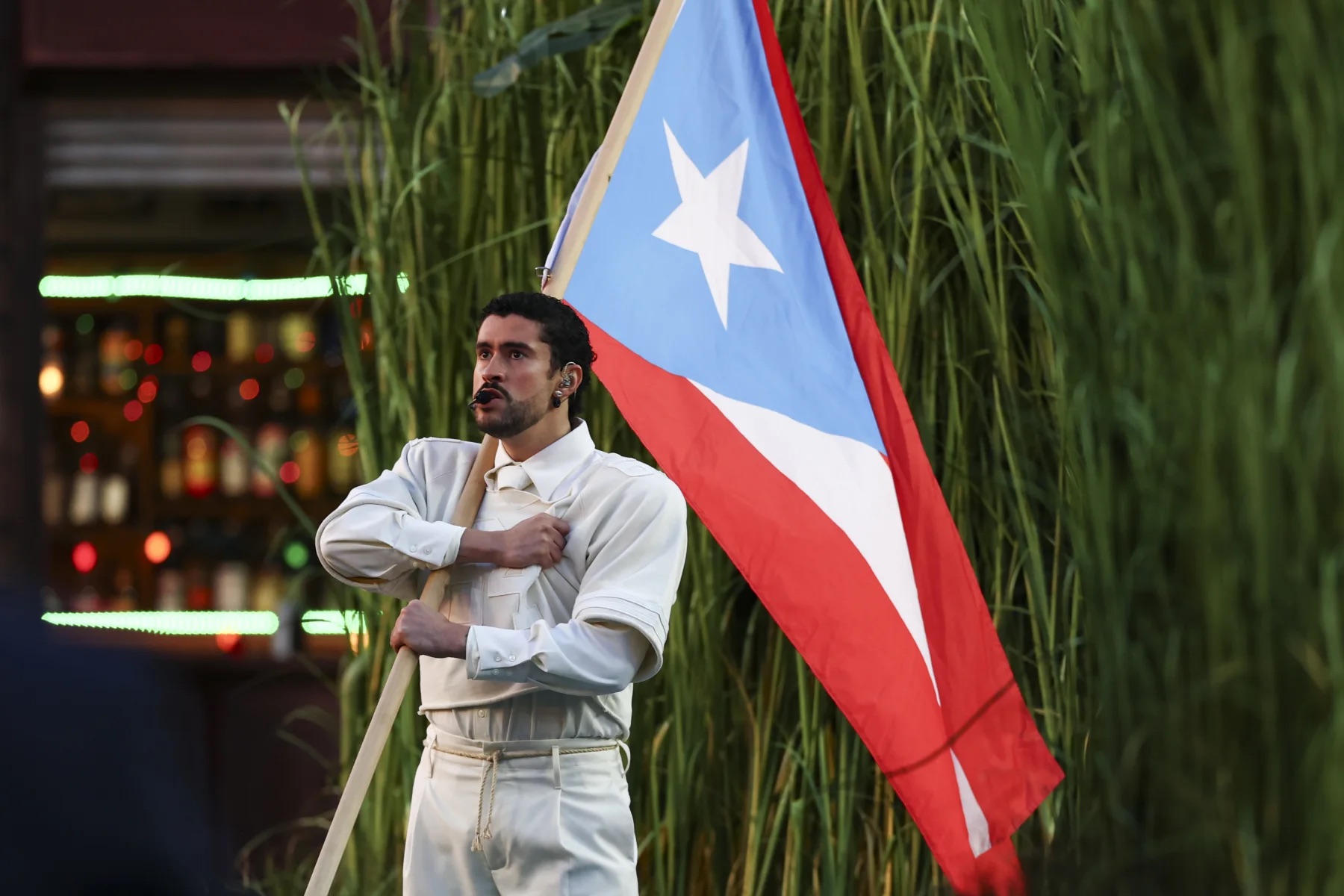
A 2026 California District Court case has added to the growing discourse surrounding such questions. The case involves - among a multitude of prominent artists from the United States, Puerto Rico, Canada, and others - our SuperBowl halftime King, Bad Bunny. Plaintiffs, two Jamaican producers, brought a copyright infringement claim against Defendants, alleging that various musical works created by Defendants copied the protectable dembow rhythm (which is a defining characteristic of the genre) contained in Plaintiffs’ song Fish Market and related works. The judge granted Defendant’s partial motion for summary judgment, holding that Plaintiffs’ failed to identify any of their own copyrightable works that contained the exact rhythm Plaintiffs sought to protect. Importantly, the judge did not address whether the dembow rhythm in and of itself was original, leaving the fate of reggaeton within the legal arena still hanging in the balance.
It is not clear that all countries would have reached the holding laid out in Browne, however. Under the Agreement on Trade-Related Aspects of Intellectual Property Rights (TRIPS), which is the current most comprehensive multilateral agreement on the topic, there are “minimum standards of protection” that member states must follow, with wiggle room for members to enact more far-reaching protections if they so choose. For example, various countries, such as “Thailand, the Philippines, Guatemala, Panama, [and] Costa Rica” embed “‘traditional knowledge’, ‘traditional cultural expressions’ and/or ‘indigenous knowledge’” within their copyright law, which could entail a cultural rhythm. On the other hand, some countries would profess, as did Defendants’ lawyer in Browne, that the idea of a rhythm being copyrightable is akin to “creating a house using various pieces of separate structures and claiming the resulting house was copied.”
So, does current international copyright law foster cultural exchange or fuel cultural appropriation? Siems might argue that we need to reimagine our perception of appropriation altogether - that “‘ideas need to meet and mate’ in order to cumulate, meaning that it can lead to something that is greater than the sum of its parts”. Further, we must decipher whether a genre arising from the “cross-fertilization” of ideas - one that has been tweaked by a plethora of cultural influences- is really capable of being boiled down to copyrightable constituent parts.
By: Kyrstin Tillman
Sources
- Reggaeton and Global Influence: The Beat That Broke Borders from Jamaican Dancehall Roots to Latin American Rhythmic Dominance, The Reggae Museum, available at https://thereggaemuseum.com/reggaeton-global-influence-the-beat-that-broke-borders-from-jamaican-dancehall-roots-to-latin-american-rhythmic-dominance/.
- Dylan Smith, Bad Bunny Legal Team Fires Back Against ‘Frankenstein’ Reggaeton Infringement Suit, Says a Copyright Claim Cannot be ‘Stitched Together From Three Separate Songs, Digital Music News, July 16, 2026, available at https://www.digitalmusicnews.com/2026/07/16/bad-bunny-reggaeton-lawsuit-reconsider-motion/.
- Reggaeton, Definition and Detailed Explanation - Dance Music Glossary, SFCOfDance, Oct. 13, 2026, available at https://sfconservatoryofdance.org/dance-music-glossary/reggaeton-2/#google_vignette.
- Cleveland Constantine Browne et al v. Rodney Sebastian Clark et al, No. 2:21-cv-02840-AB-AJR, (C.D. Cal. Sept. 1 2026). ECF No.866.
- Overview: The TRIPS Agreement, World Trade Organization (2026), available at https://www.wto.org/english/tratop_e/trips_e/intel2_e.htm.
- Mathias Siems, The Law and Ethics of ‘Cultural Appropriation’, 15 International Journal of Law in Context 408, 412 (Dec. 13, 2019), available at https://www.cambridge.org/core/journals/international-journal-of-law-in-context/article/law-and-ethics-of-cultural-appropriation/1F8567C557AA2A4703A06378029FF72D.
You May Also Like