Jordan vs. Qiaodan: A 1-on-1 in the Court of Trademark Law
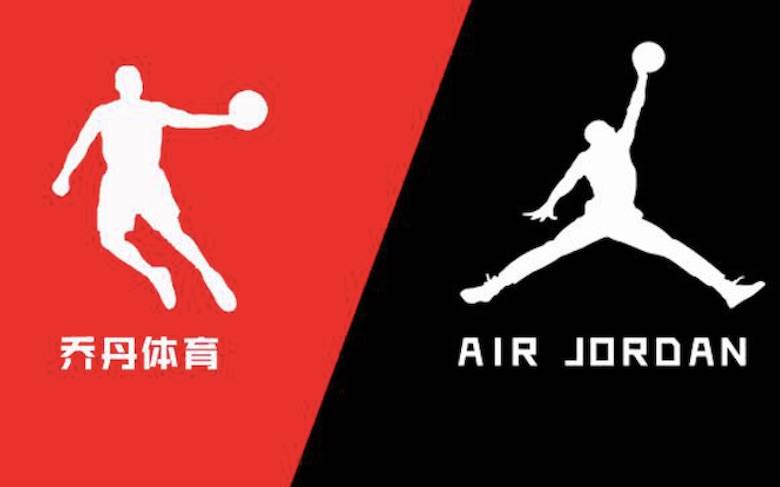
When people think of trademark disputes, it is often pretty clear: counterfeiters, cheap knockoffs, or bad-faith actors exploiting famous brands. However, the 1-on-1 between Michael Jordan (and Nike) and the Chinese sportswear company, Qiaodan Sports, demonstrates how much messier international trademark disputes can be, especially when rules, languages, and borders collide.
The dispute began in China, where a domestic company called Qiaodan Sports(乔丹体育) had been selling athletic shoes and apparel for years. “Qiaodan” is the standard Chinese transliteration of “Jordan,” and the company used a silhouette logo — although not the famous “Jumpman” logo — that looked almost identical to a photo of Michael Jordan, taken in a basketball game. To many Chinese consumers, the brand appeared connected to Michael Jordan — except that it wasn’t.
From a U.S. legal perspective, the case looked like an obvious infringement: Michael Jordan is globally famous, “Jordan” is the name and face of the sport of basketball, and Nike’s Air Jordan brand is one of the most valuable trademarks in the world (worth around $3.5 billion). However, trademark laws are territorial, not global, and China’s system operates under a “first-to-file” rule, meaning that whoever registers the mark first generally owns it, regardless of fame elsewhere. This gave Qiaodan Sports, or Chinese “Jordan”, a chance to play on the court.
Qiaodan Sports had registered dozens, and eventually hundreds of trademarks in China using “乔丹,” “QIAODAN,” and related trademarks long before the actual Jordan or Nike secured equivalent legal titles. When Jordan sued in 2012, the Chinese lower courts initially ruled against him. Their reasoning was formal but consistent with Chinese trademark doctrine at the time: “Jordan” is a common English surname, and Jordan failed to prove that the Chinese characters “乔丹” were uniquely associated with him, in the minds of Chinese consumers at the time of registration.
So, did this mean that the GOAT lost the 1-on-1 against his Chinese knockoff? Not so fast. The turning point came in 2016, when China’s Supreme People’s Court partially reversed the ruling. The Court held that Michael Jordan did, in fact, have name rights in the Chinese characters: “乔丹,” given his fame and public recognition in China. As a result, certain “Qiaodan” trademarks were canceled, particularly those most closely tied to the Chinese-character version of his name.
But this was not the game winning shot. The Court also ruled that Jordan did not have exclusive rights to the pinyin “QIAODAN” or to all related marks, thus many of Qiaodan Sports’ registrations survived. No sweeping damages were awarded and Qiaodan continued operating, rebranding only at the margins. It seems like no one truly won.
On the legal side, this case presents a major tension in international trademark law: rules do not automatically travel across borders. Trademarks are largely granted by national authorities, governed by local rules, and interpreted through local language and consumer perception. International agreements like the Paris Convention may offer some levels of procedural protections, but they do not replace the need for early, preventative trademark registration in each targeted jurisdiction. On the other hand, the case was a cautionary lesson to all existing and future international brands. Nike ultimately “won” the recognition that Qiaodan’s branding exploited Michael Jordan’s reputation, but only after years of litigation, limited remedies, and unfair market entrenchment by the Chinese company.
Jordan vs. Qiaodan wasn’t just a legal 1-on-1, it was a much needed lesson on the path of commercial globalization. In international commerce, the scoreboard isn’t set by global fame alone. It’s set by filing dates, local law, and how well a brand plays defense, before the game even starts. But by the end of the day, “Jordan” still won, as the greatest-of-all-time.
Article Written by Frank Ji
Sources:
Michael Jeffrey Jordan v. Trademark Review and Adjudication Board and Qiaodan Sports Co., Ltd., (2016) ZGFXZ No. 27, SPC (Sup. People’s Ct. of China Dec. 8, 2016) (administrative judgment) (English translation available online).
Paris Convention for the Protection of Industrial Property, Mar. 20, 1883, as revised at Brussels Dec. 14, 1900, Washington June 2, 1911, The Hague Nov. 6, 1925, London June 2, 1934, Lisbon Oct. 31, 1958, and Stockholm July 14, 1967, and amended Sept. 28, 1979, WIPO Lex No. TRT/PARIS/001, available at WIPOLEX (World Intellectual Property Organization).
You May Also Like